CERVICAL VERTEBRAE ANATOMY

Cervical Vertebrae - Overview, Preview from the app. Download 3D OSTEOLOGY for full 3D control—multiple views, x-ray mode, and unlimited zoom.
CERVICAL OVERVIEW
- The cervical spine consists of seven vertebrae
- C1 (atlas), C2 (axis), and C7 (vertebra prominens) are clearly recognisable
- C3–C6 share similar structural characteristics
GENERAL FEATURES
- Cervical vertebrae are the smallest true vertebrae
- Identified by a foramen in each transverse process (foramen transversarium)
- The features described below characterize C3–C6
- C1, C2, and C7 have unique structures

Cervical Vertebra - Detailed Structure, Preview from the app. Download 3D OSTEOLOGY for full 3D control—multiple views, x-ray mode, and unlimited zoom.
BODY
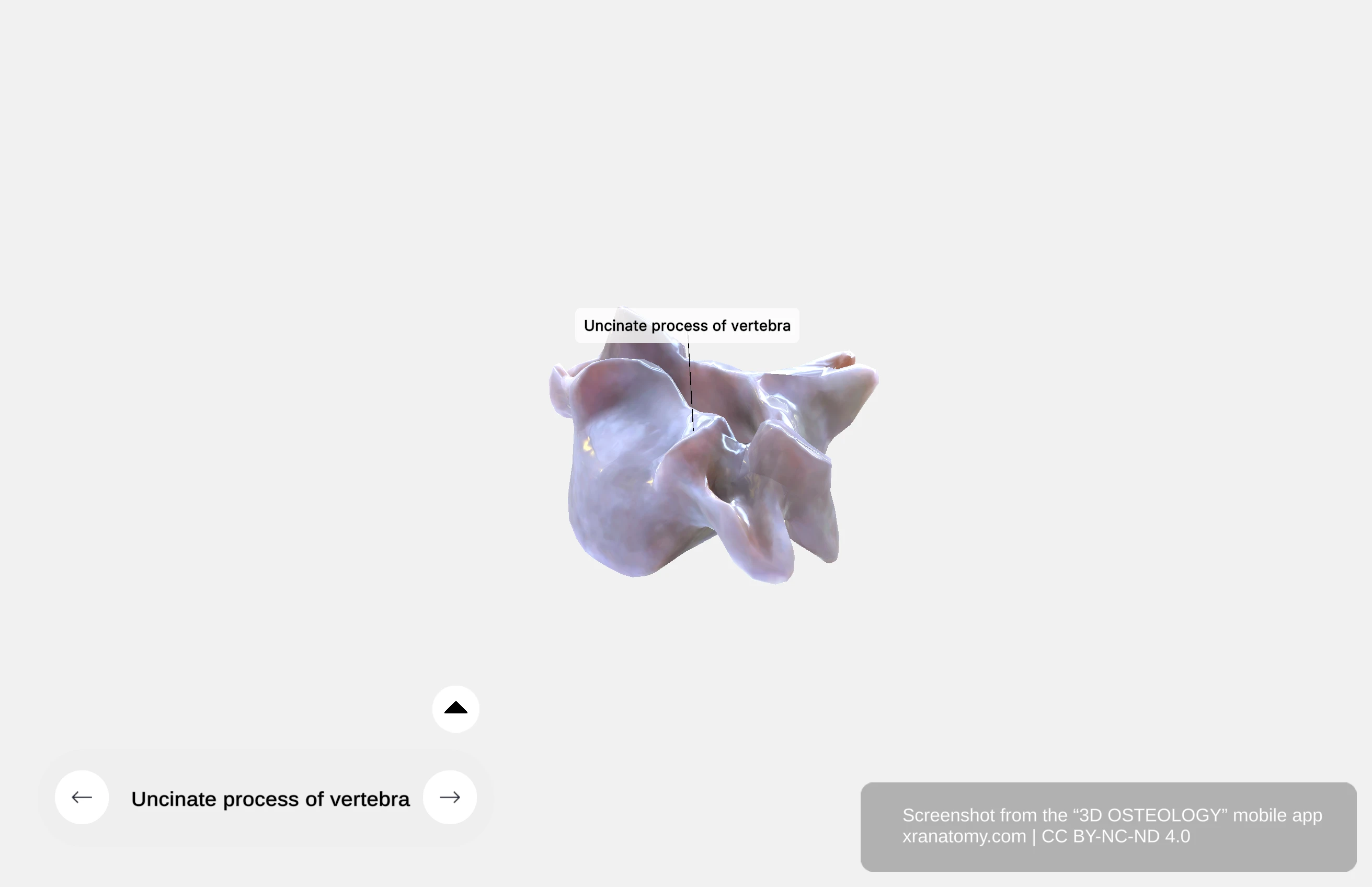
Uncinate Process of Cervical Vertebra, Preview from the app. Download 3D OSTEOLOGY for full 3D control—multiple views, x-ray mode, and unlimited zoom.
- The vertebral body is small and wider from side to side than front to back
- The upper surface is concave and has raised edges called uncinate processes
- Uncinate processes project upward from the body
- The lower surface fits the vertebra below using shallow lateral depressions
PEDICLES AND LAMINAE
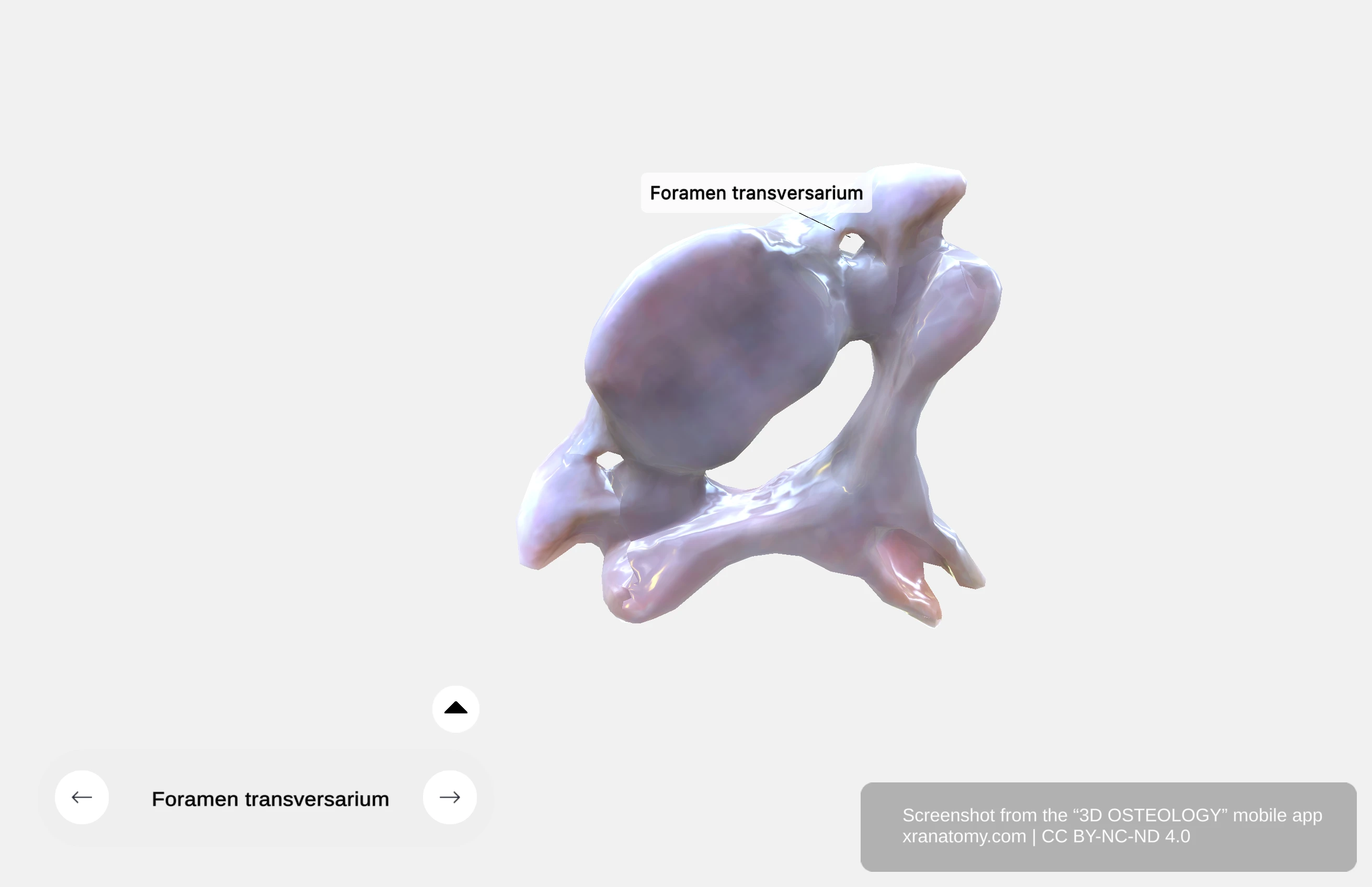
Foramen Transversarium, Preview from the app. Download 3D OSTEOLOGY for full 3D control—multiple views, x-ray mode, and unlimited zoom.
- Pedicles extend backward and slightly outward from the body
- Form superior and inferior vertebral notches
- Laminae are narrow and form a large triangular vertebral foramen
SPINOUS PROCESS
- The spinous process is short and commonly bifid
ARTICULAR PROCESSES
- The superior and inferior articular processes form a vertical column on each side called the articular pillar
- Superior facets face upward and backward
- Inferior facets face downward and forward
TRANSVERSE PROCESSES
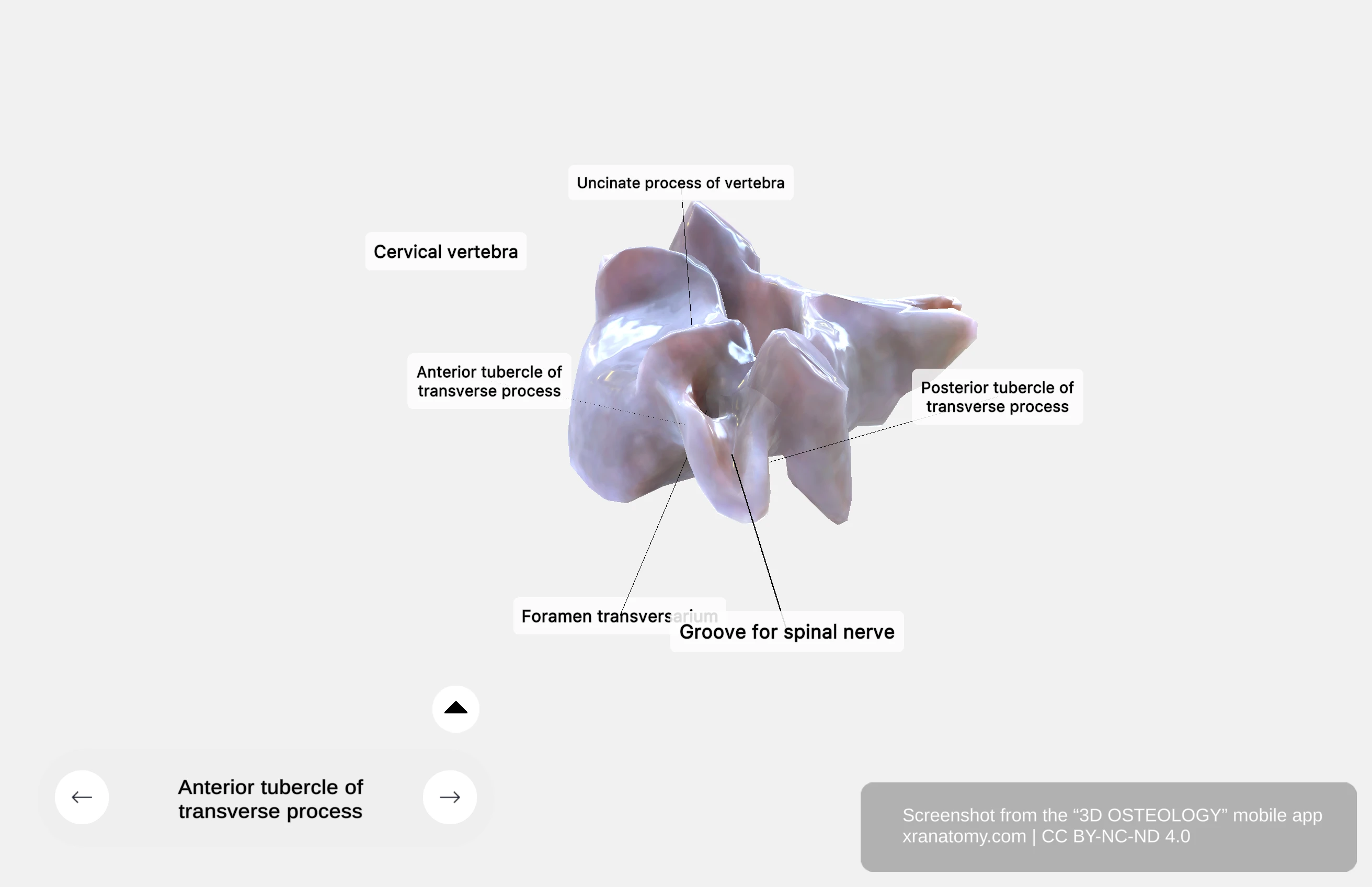
Anterior Tubercle of Transverse Process, Preview from the app. Download 3D OSTEOLOGY for full 3D control—multiple views, x-ray mode, and unlimited zoom.
- Each transverse process contains a foramen transversarium
- Carries the vertebral artery, vein, and sympathetic nerves in C1–C6
- Each transverse process has two parts:
- The anterior part forms the anterior tubercle, located in front of the foramen
- The posterior part forms the posterior tubercle, located behind the foramen
- A groove for the spinal nerve lies on the upper surface between the anterior and posterior tubercles
BIBLIOGRAPHY
1. Henry G, Warren HL. Osteology. In: Anatomy of the Human Body. 20th ed. Philadelphia: Lea & Febiger; 1918. p. 129–97.