RIB CAGE ANATOMY

Rib Cage - Overview, Preview from the app. Download 3D OSTEOLOGY for full 3D control—multiple views, x-ray mode, and unlimited zoom.
TABLE OF CONTENTS
RIBS CAGE
- The rib cage typically consists of twelve pairs of ribs, with occasional variation
- The first seven pairs, known as true ribs, attach directly to the sternum via costal cartilages, forming a supportive, flexible structure that aids respiration and protects vital organs
- The lower five pairs are false ribs, where ribs eight to ten attach indirectly to the sternum via cartilage
- Ribs eleven and twelve, called floating ribs, have no sternal connection
True Ribs (Ribs 1-7)
- First seven pairs of ribs
- Attach directly to the sternum via individual costal cartilages
- Also called vertebrosternal ribs
- Provide primary structural support to the thoracic cage
False Ribs (Ribs 8-10)
- Ribs eight, nine, and ten
- Attach indirectly to the sternum via the cartilage of the rib above
- Also called vertebrochondral ribs
- Contribute to the costal arch formation
Floating Ribs (Ribs 11-12)
- Ribs eleven and twelve
- Have no sternal attachment
- Also called vertebral ribs
- Pointed ends that are free in the musculature
- Provide protection for the kidneys
COSTAL CARTILAGES
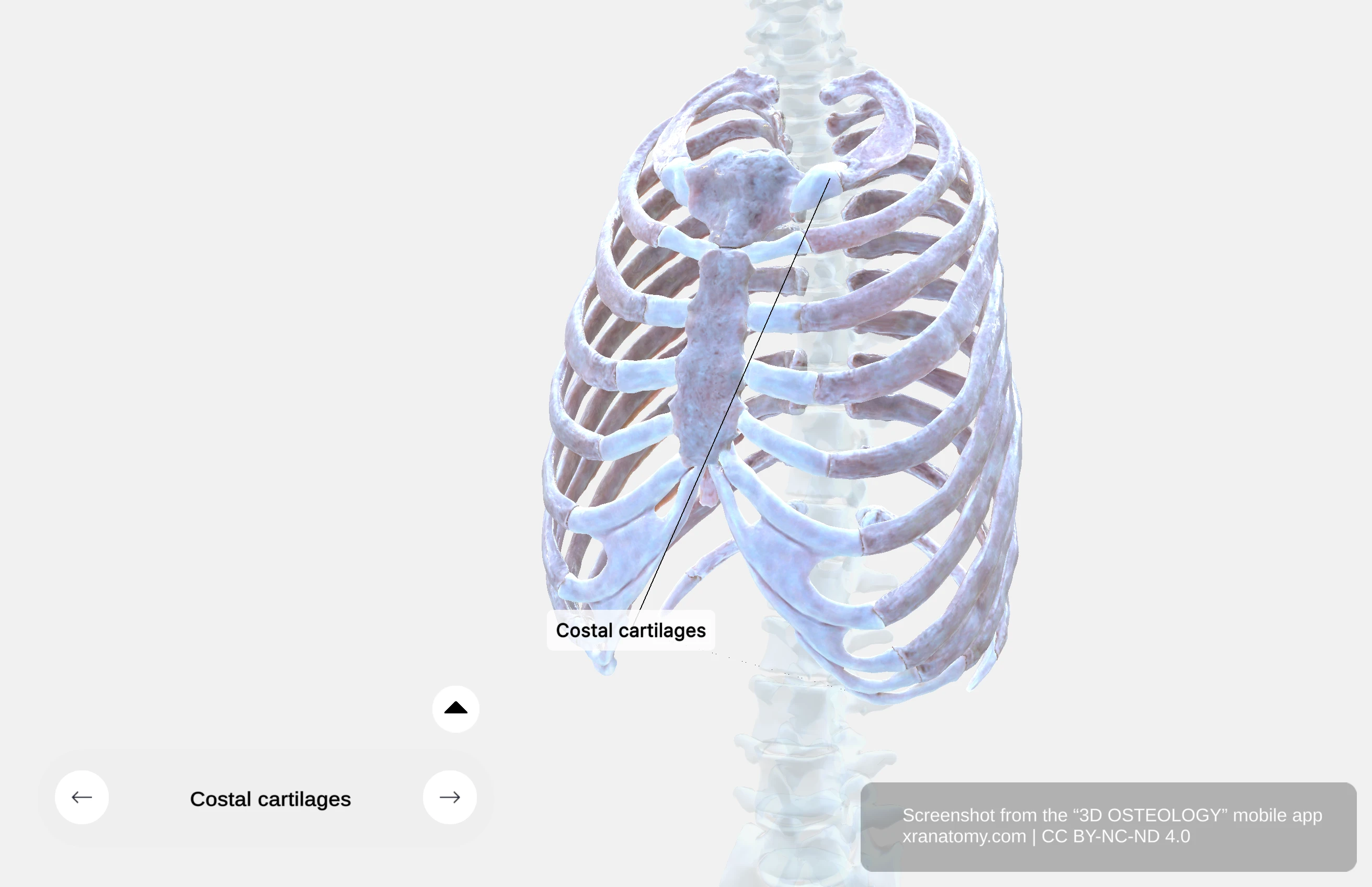
Costal Cartilages - Overview, Sourced from the app 3D OSTEOLOGY
- Costal cartilages are bars of hyaline cartilage that connect the ribs to the sternum or to each other
- Provide flexibility to the thoracic wall necessary for respiration
Connections
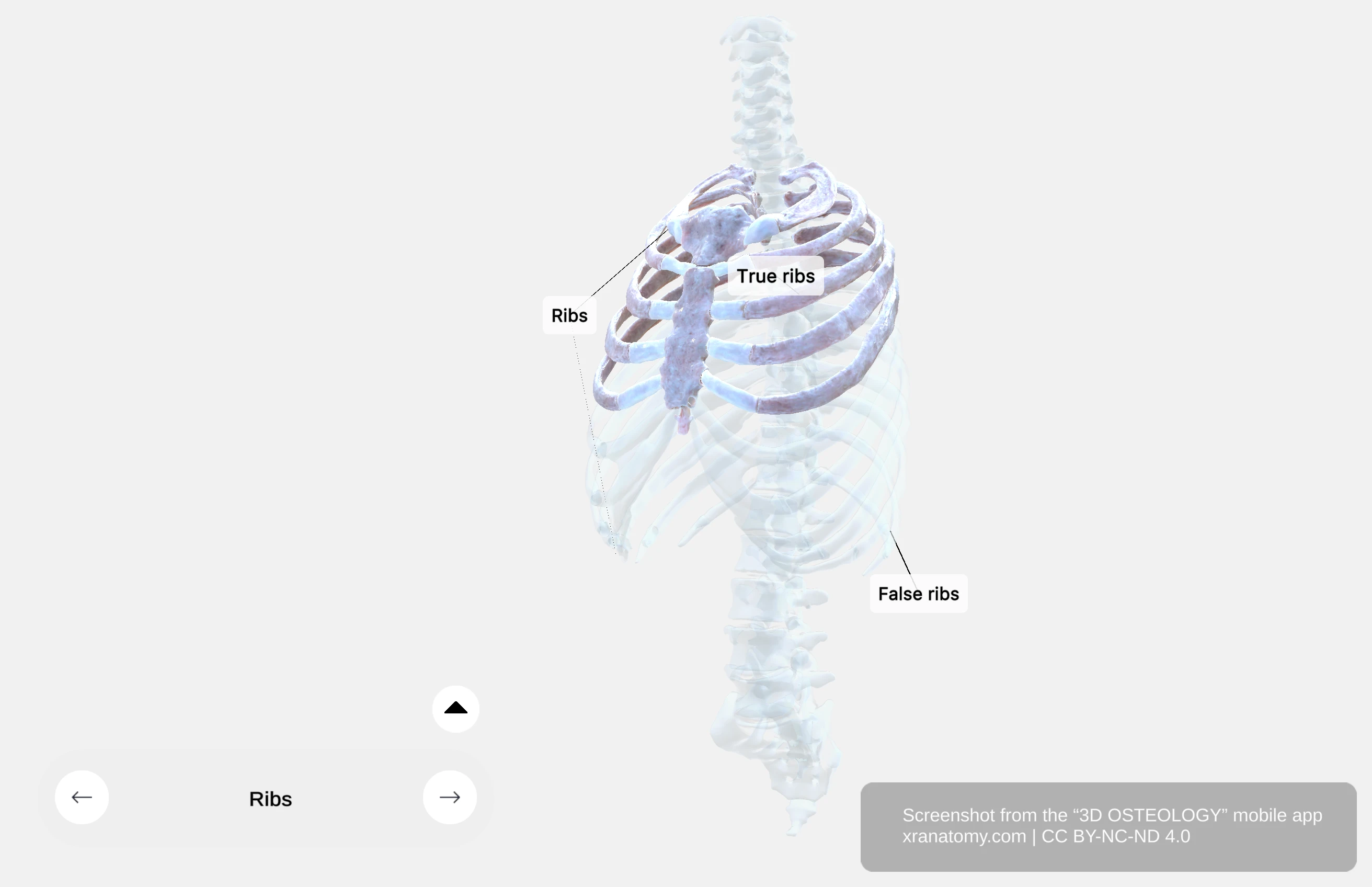
Costal Cartilages - Connections, Sourced from the app 3D OSTEOLOGY
- First seven pairs connect directly to the sternum
- Eighth, ninth, and tenth ribs attach to the cartilage above
- Eleventh and twelfth pairs (floating ribs) have pointed ends without sternum attachment
Function
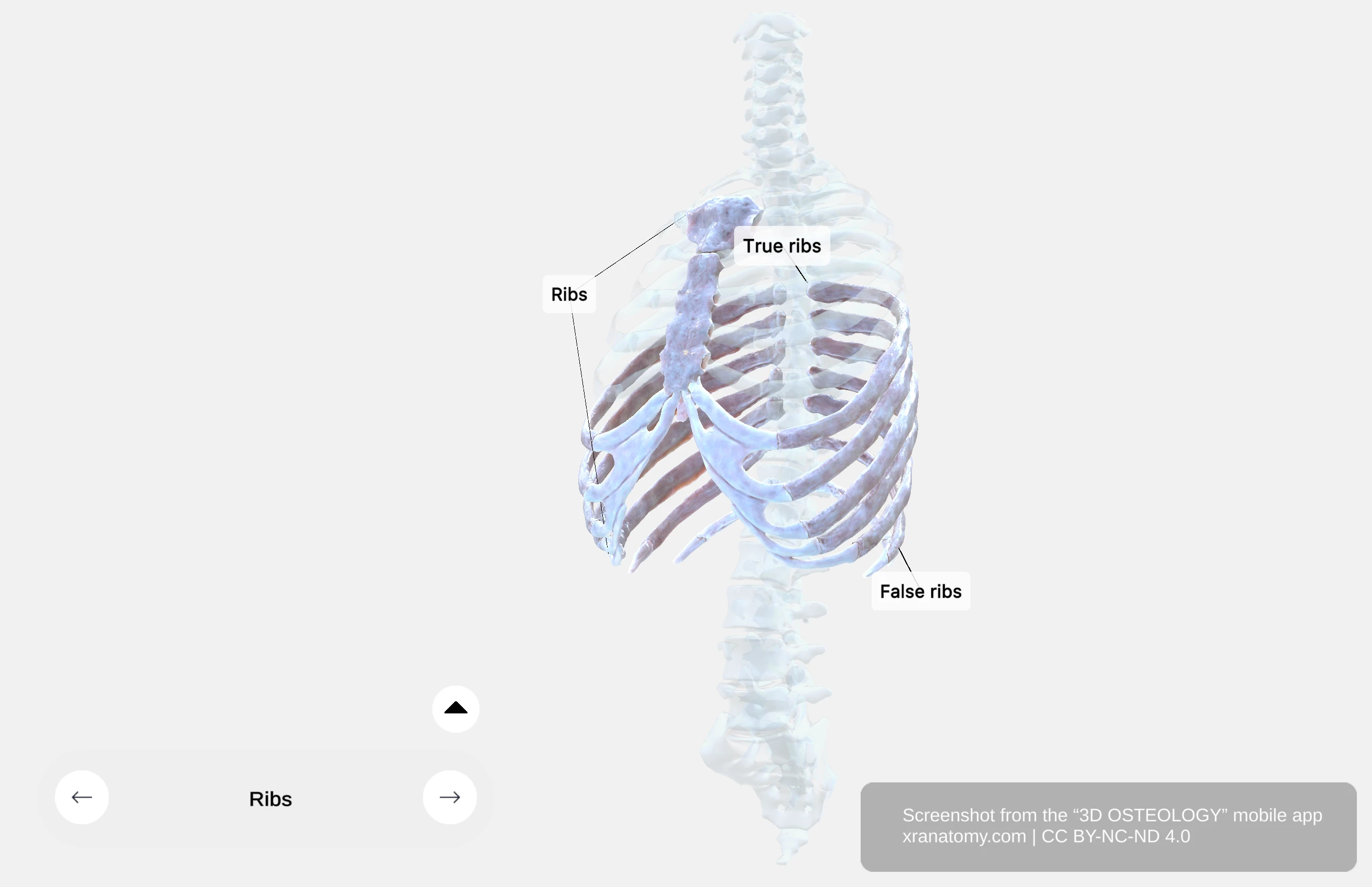
Costal Cartilages - Function, Sourced from the app 3D OSTEOLOGY
- Provides flexibility to the thoracic wall
- Facilitates thoracic wall expansion during respiration
COSTAL ARCH

Costal Arch - False Ribs, Preview from the app. Download 3D OSTEOLOGY for full 3D control—multiple views, x-ray mode, and unlimited zoom.
- Formed by the cartilages of the seventh to tenth ribs
- Curves upward and forward to meet at the xiphoid process
- Contributes to the flexibility of the thoracic wall
- Accommodates lung expansion during breathing
Costal Margin
- The lower edge of the costal arch
- Forms the infrasternal angle at the xiphoid process
- Important anatomical landmark for clinical examination
BIBLIOGRAPHY
1. Henry G, Warren HL. Osteology. In: Anatomy of the Human Body. 20th ed. Philadelphia: Lea & Febiger; 1918. p. 129–97.